








Yes, potentially. In some cases, injuries result from unsafe conditions, reckless conduct, or failures in supervision, and legal action may be possible. Compensation can include medical costs, lost income, and the broader impact of your injuries.
Colorado has a strong sports culture, from professional teams like the Denver Broncos, Denver Nuggets, and Colorado Avalanche to college teams like the Colorado Buffaloes. Across Denver, adults and children take part in recreational leagues, school sports, and gym training. While most participation is safe, injuries can occur, including fractures, traumatic brain injuries (TBI), and spinal cord damage. Many risks are considered part of the sport, but not all incidents fall within what is expected during normal play.
While our head office is on Lincoln Street in Downtown Denver, the sports injury attorneys at Ogborn Mihm represent professional athletes and individuals nationwide. We prepare every case for trial, with a clear focus on securing compensation that reflects the long-term impact of your injuries. For a free consultation to discuss your case, contact our law offices today.
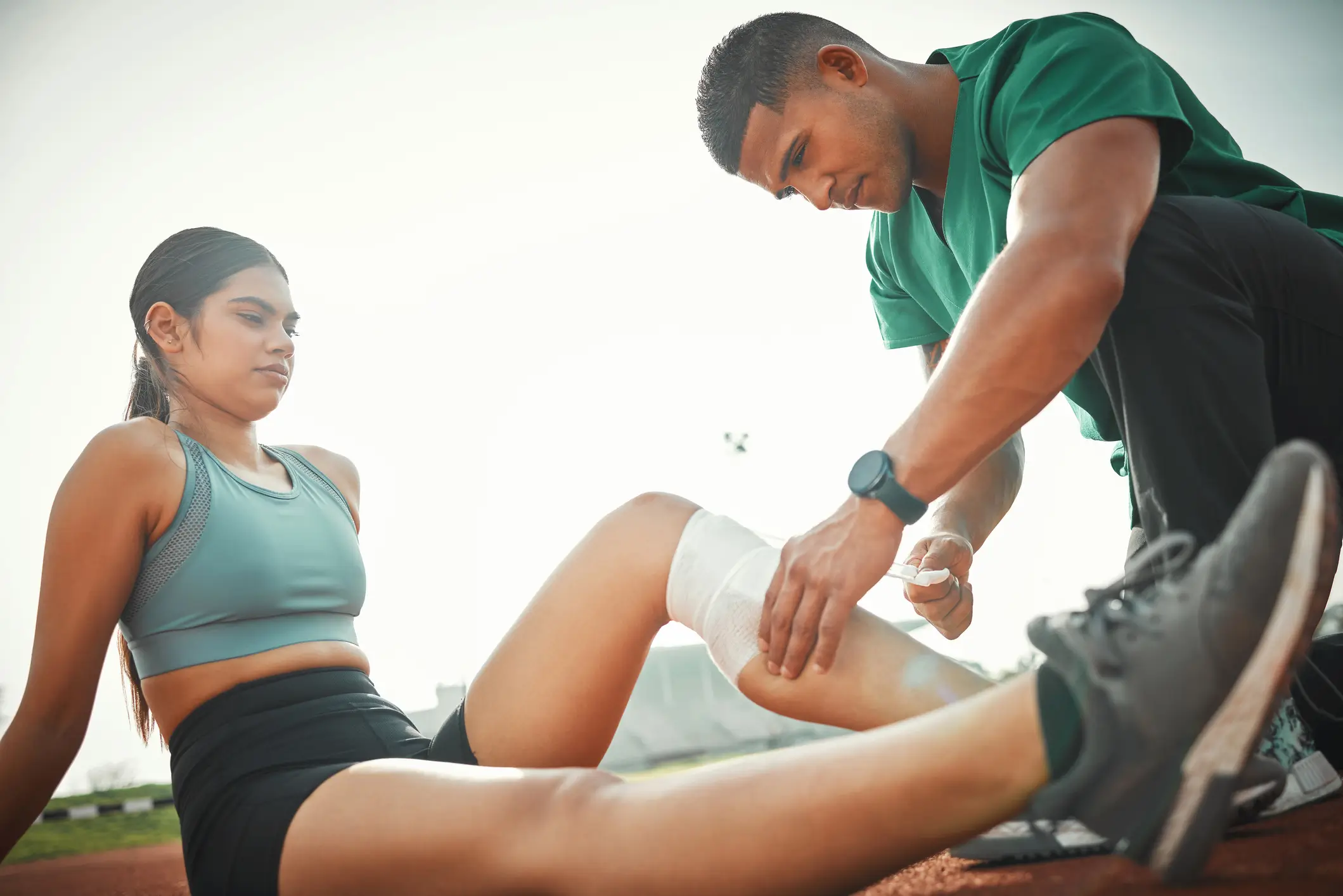
When Can You Sue for a Sports Injury in Colorado?
Not every sports injury leads to a legal claim. In Colorado, the key question is whether the injury arose from a normal part of the sport or from conduct that went beyond what participants should reasonably expect.
The Core Rule: Inherent Risk vs. Preventable Harm
Sports involve known risks such as contact, collisions, and falls. These are considered inherent risks, and participants generally accept them when they take part. For example, a hard tackle or collision within the rules will not usually give rise to a claim.
However, this protection has limits. A claim may arise where the injury is linked to negligence, reckless conduct, or intentional harm that increases the level of risk beyond what is expected.
When You May Be Able to Bring a Claim
You may have grounds to pursue a claim where the injury was caused by something that should not have occurred during normal play.
Examples include:
- A player acting with excessive force or outside the rules
- A coach introducing unsafe drills or ignoring clear risks
- A referee failing to enforce basic safety standards
- A facility allowing play to continue in dangerous conditions
- Faulty or poorly maintained equipment
In these situations, the issue is whether the risk was avoidable and whether reasonable steps were taken to prevent harm.
When a Claim Is Less Likely to Succeed
Injuries resulting from ordinary gameplay are less likely to support a successful claim, even when the outcome is serious.
A claim may be less likely where:
- The injury resulted from normal contact within the rules
- The risk was obvious and inherent to the activity
- There is no clear evidence of negligence or unsafe conduct
Sports injury claims in Colorado usually come down to a simple distinction: whether the injury arose from an accepted risk or a preventable failure.
Real-World Scenarios Where Sports Injuries Occur
Sport-related injuries can occur at both the professional and recreational levels. Common scenarios include:
- Professional and Elite Sports Environments: High-speed movement, physical contact, and return-to-play decisions can lead to serious injuries, particularly where medical protocols are not followed or athletes are pressured to continue.
- Recreational Leagues and Adult Sports: Weekend leagues across Denver, including those near Washington Park, often feature mixed skill levels. Injuries can occur where conduct becomes overly aggressive or when rules are not properly enforced.
- School and Youth Athletics: In school or club sports across Denver, including programs at East High School and Denver South High School, injuries may arise when supervision is lacking or safety protocols are not followed, such as untreated concussions or unsafe training practices.
- Indoor Gyms and Training Facilities: Facilities throughout Denver, including in areas like LoDo, can present risks where equipment is poorly maintained or spaces are overcrowded, leading to preventable accidents.
- Outdoor Fields and Public Spaces: Sports played on public fields and courts, including those near City Park, can result in injuries when surfaces are uneven, poorly maintained, or inadequately lit.
While all sports involve accepted risks, injuries caused by negligence may give rise to legal action. Our Denver sports injury attorneys can assess the circumstances of your injury and advise whether you may have grounds to proceed.
What to Do Following a Sports-Related Injury
Taking the following steps early can help protect both your health and any potential legal action:
Obtain a Medical Evaluation, Particularly After Head Trauma
You should seek a prompt medical evaluation following any significant contact, fall, or suspected head injury. Concussions and other brain injuries are not always immediately apparent, making early assessment important.
A timely evaluation also creates a clinical record and helps establish whether your condition is linked to the sporting incident.
Ensure the Matter Is Formally Reported
In organized sport, injuries should be reported to a coach, referee, or league official. You should also notify the relevant school athletics department, tournament organizer, or the operator of a public facility, such as Denver Parks and Recreation.
A formal report provides an independent account of what occurred, including the conditions, the behavior involved, and any concerns raised at the time.
Record the Conditions and Conduct
It is important to note anything that may have contributed to the injury, such as unsafe surfaces, faulty equipment, or conduct that went beyond the rules.
This helps distinguish between an accepted risk and something that could have been prevented.
Monitor Symptoms and Recovery
Some injuries only become fully apparent after the initial incident. Tracking your symptoms, treatment, and how the injury affects your daily activities can help demonstrate the extent of the impact over time.
Contact a Colorado Sports Injury Law Firm
A sports injury attorney can assess how the incident occurred and whether conduct, supervision, or conditions fell below a reasonable standard. This includes reviewing whether rules were followed, safety protocols were in place, and whether the risk went beyond what is normally expected in the sport.
In more complex cases involving catastrophic injuries and head trauma, an attorney can work with medical professionals to review how the injury has been diagnosed, documented, and connected to the incident.
Who May Be Liable in Sports Injury Cases?
Determining liability for a sports injury in Colorado depends on how the incident occurred and whether the risk went beyond what is normally accepted. Potentially responsible parties may include:
Another Player
A player may be liable where their conduct goes beyond the rules or expectations of the sport. This can include excessive force, dangerous play, or intentional actions that create an unnecessary risk of harm. The key issue is whether the conduct falls outside what participants reasonably accept.
Coaches, Officials, and Organizers
Those responsible for overseeing sport may be liable where safety standards are not maintained. This includes coaches, referees, school programs, and league or tournament organizers across Colorado.
Liability may arise where unsafe drills are introduced, dangerous conduct is not addressed, injuries are ignored, or players are encouraged to continue despite clear risks. Failures in supervision, planning, or the enforcement of basic safety rules may all be relevant.
Facility Owners and Operators
Where an injury is linked to the condition of the playing environment, responsibility may fall on the facility’s owner or operator. This includes private gyms, training centers, and public venues used for organized sport.
Liability can arise where surfaces are unsafe, maintenance is inadequate, or hazards are not properly addressed.
Equipment Manufacturers and Suppliers
In some cases, injuries may be caused or made worse by defective equipment. This can include protective gear that fails on impact or equipment that breaks during use. Liability may arise where the product was unsafe or not fit for its intended purpose.
It is not uncommon for more than one party to be responsible. The sports injury lawyers at Ogborn Mihm can conduct a detailed investigation into the circumstances of your injury and identify all potentially liable parties, including where responsibility is divided.
Laws That Apply to Sports Injury Cases in Colorado
These types of claims are governed by legal principles that distinguish between accepted risk and preventable harm. Key considerations include:
Negligence and Duty of Care
Most sports-related injury claims are based on negligence. This requires showing that a party owed a duty of care, failed to meet that standard, and caused the injury as a result.
In sports settings, the standard of care will depend on the role of the person or organization involved. Coaches, facility operators, and organizers are generally expected to take reasonable steps to maintain safe conditions and reduce unnecessary risk.
Waivers and Liability Releases
Waivers are commonly used in sports settings, particularly in recreational leagues, gyms, and organized events. They are intended to limit liability by confirming that participants accept certain risks.
However, waivers are not always enforceable. Their effect depends on how clearly they are written, the circumstances in which they were signed, and the conduct involved. They are less likely to protect against reckless behavior or failures to meet basic safety standards, and may face closer scrutiny in cases involving minors.
Comparative Fault
Colorado applies a modified comparative fault rule, meaning responsibility for an injury can be shared between multiple parties, including the injured person.
Where fault is divided, any recovery may be reduced in proportion to that share. If a claimant is found to be 50% or more responsible, recovery is generally not available.
Premises and Product Liability
In some cases, responsibility arises from the environment or equipment involved.
Premises liability may apply where an injury is linked to unsafe conditions at a facility, such as poorly maintained surfaces or hazards that were not addressed.
Product liability may arise where equipment is defective or fails during normal use, including protective gear that does not perform as expected.
The sports injury attorneys at Ogborn Mihm can ensure these rules are applied fairly and that responsibility is not wrongly attributed to you.
Frequently Asked Questions About Sports Injury Cases
Below are some of the most common questions we receive from clients who have been injured in Denver and across Colorado.
How long do you have to file a sports injury claim in Colorado?
In most cases, personal injury claims in Colorado must be brought within two years of the date of the injury. However, there may be exceptions depending on the circumstances, particularly where the injury is not immediately apparent or involves a minor.
Does signing a waiver prevent you from taking legal action?
Not necessarily. Waivers may limit liability, but they are not always enforceable, particularly where the terms are unclear or the conduct goes beyond ordinary negligence. They are less likely to protect against reckless behavior or failures to meet basic safety standards.
Can parents bring a claim for a child’s sports injury?
Yes, in many cases, a parent or guardian can bring a claim on behalf of a child. Courts often apply additional scrutiny where minors are involved, particularly in relation to waivers and supervision. The focus is on whether reasonable steps were taken to protect the child’s safety.
What evidence is needed to prove negligence?
Proving negligence typically involves showing how the incident occurred and whether it resulted from a preventable failure. This may include incident reports, witness accounts, and photographs or video footage. Medical evidence is also important in linking the injury to the event.
Learn More About Sports Injury Claims With Ogborn Mihm
At Ogborn Mihm, we are widely recognized for our work in catastrophic injury cases, with particular experience in traumatic brain injuries arising in sports and other high-impact environments. Based in Denver and representing clients nationwide, we have the experience and resources these cases often require. For a free case review, contact our law firm today.


